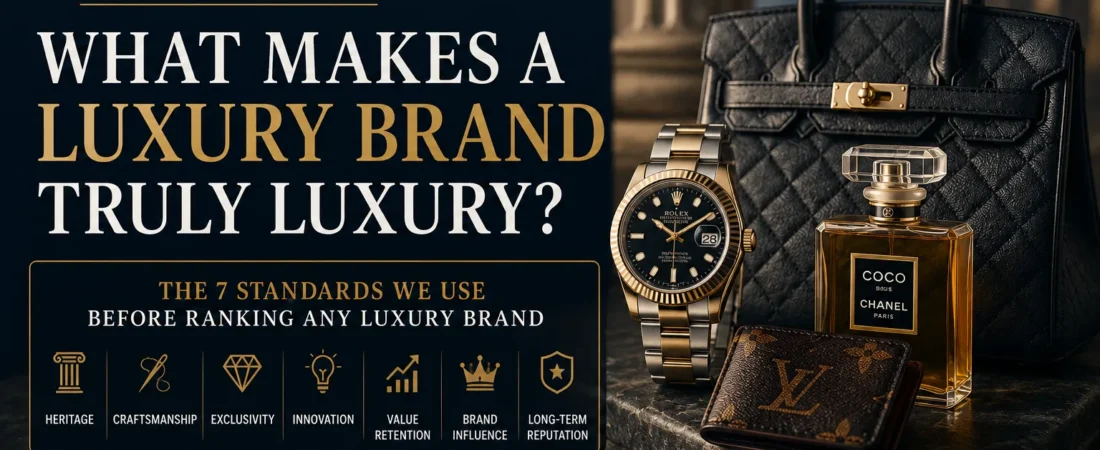
The 7 Standards We Use Before Ranking Any Luxury Brand
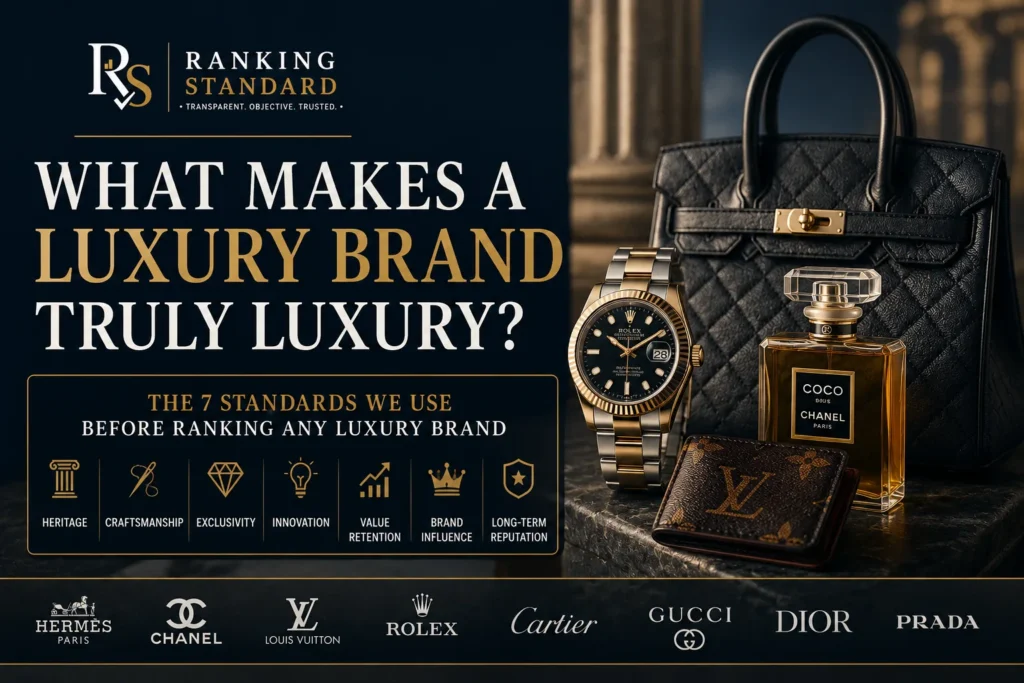
Luxury is one of the most overused words in modern marketing.
Today, almost every premium product is described as “luxury.”
A handbag costs $2,000.
A watch sells for $10,000.
A sports car carries a six-figure price tag.
But does a high price automatically make something luxurious?
Not necessarily.
At Ranking Standard, we believe luxury is far more than a price tag.
True luxury is built over decades—sometimes centuries—through craftsmanship, heritage, exclusivity, and trust.
That’s why, before we publish a single luxury ranking, we first establish the standards behind our evaluation.
Luxury Is Not the Same as Expensive
Many premium products are expensive.
Very few become true luxury brands.
Price can increase because of limited supply, advanced technology, or rising production costs.
Luxury, however, represents something different.
It reflects a long-term ability to create desire, preserve value, and maintain prestige across generations.
A product may become cheaper over time.
A true luxury brand rarely becomes less desirable.
The Seven Standards We Use
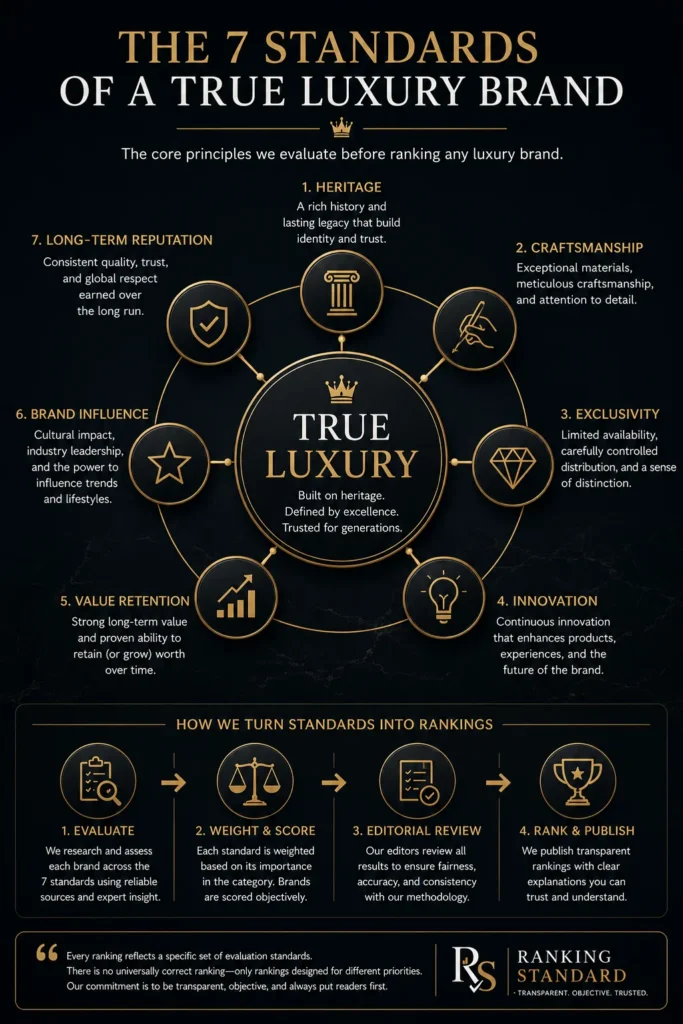
Every luxury ranking published by Ranking Standard is built on seven core evaluation standards.
Each category may apply different weighting, but these principles remain consistent.
1. Heritage
The world’s greatest luxury brands tell stories that span generations.
History alone doesn’t guarantee quality, but heritage creates identity.
Brands like Hermès, Rolex, Cartier, and Louis Vuitton have spent decades building reputations that cannot be replicated overnight.
A young brand may produce exceptional products.
A historic brand carries something more difficult to measure:
Trust.
2. Craftsmanship
Luxury begins with exceptional craftsmanship.
Materials matter.
Attention to detail matters.
Quality control matters.
Whether it’s a mechanical watch movement, hand-stitched leather, or precision engineering, true luxury products demonstrate a level of craftsmanship that exceeds mass-market expectations.
This is often where genuine luxury separates itself from premium products.
3. Exclusivity
Luxury loses part of its appeal when everyone can own it.
Exclusivity doesn’t always mean limited production.
It may come through waiting lists, carefully controlled distribution, limited editions, or exceptional customization.
The goal isn’t simply scarcity.
It’s preserving desirability.
4. Innovation
Luxury isn’t trapped in the past.
The strongest luxury brands continuously innovate while respecting their heritage.
Innovation may involve:
- New materials
- Advanced manufacturing
- Improved sustainability
- Technical performance
- Digital experiences
The challenge is balancing innovation without losing brand identity.
5. Value Retention
Luxury products are often viewed differently from ordinary consumer goods.
Some watches appreciate.
Some handbags retain remarkable resale value.
Certain collector vehicles outperform traditional investments over time.
While investment potential is never the primary purpose of luxury, long-term value retention reflects market confidence.
6. Brand Influence
Some brands shape culture.
Others simply follow trends.
We consider whether a luxury brand influences:
- Fashion
- Design
- Consumer behavior
- Industry standards
- Popular culture
Leadership matters.
Being copied often says more than advertising ever could.
7. Long-Term Reputation
Reputation is earned slowly.
It can also disappear quickly.
We evaluate how consistently a brand has maintained quality, customer trust, and prestige over time.
One successful product doesn’t define a luxury brand.
Consistency does.
How We Apply These Standards
Not every category should be judged equally.
For example:
A luxury watch places greater emphasis on craftsmanship and heritage.
A luxury automobile may prioritize engineering, innovation, and brand influence.
A luxury fashion house may score higher for creativity and cultural impact.
Rather than forcing identical criteria across every category, we adjust the weighting while maintaining the same editorial principles.
This creates rankings that are both consistent and category-appropriate.
Why Price Isn’t Everything
One of the biggest misconceptions about luxury is that higher prices automatically mean higher rankings.
They don’t.
An exceptionally expensive product may still receive a lower ranking if it falls short in craftsmanship, innovation, customer trust, or long-term reputation.
Likewise, a relatively accessible luxury brand may outperform more expensive competitors because it delivers stronger overall value according to our evaluation standards.
Luxury should be earned—not assumed.
Looking Ahead
This article establishes the editorial standards behind every luxury ranking published by Ranking Standard.
In the coming weeks, we’ll apply these standards across categories including:
- Luxury Fashion Houses
- Luxury Watch Brands
- Luxury Automobile Brands
- Luxury Jewelry Brands
- Luxury Luggage Brands
- Luxury Hotels
- Luxury Champagne & Spirits
Every ranking will explain not only who ranks highest, but why.
Final Thoughts
Luxury is more than exclusivity.
More than craftsmanship.
More than prestige.
It is the combination of qualities that continue to create value long after trends have changed.
At Ranking Standard, we believe readers deserve rankings built on transparent standards—not assumptions.
That’s why every luxury ranking begins here.
Editorial Note
Every ranking reflects a specific set of evaluation standards. There is no universally correct ranking—only rankings designed for different priorities. Our commitment is to explain those standards transparently so every reader can make informed decisions with confidence.