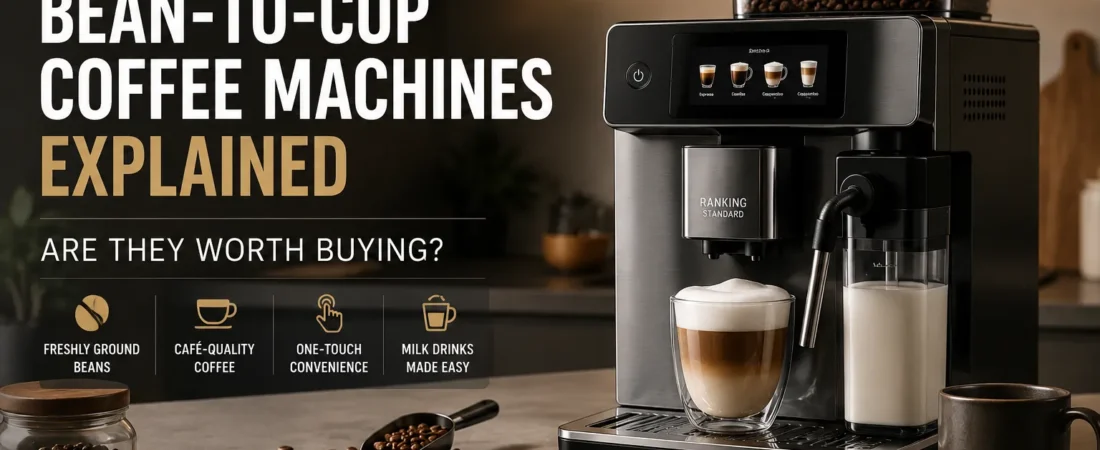
For many coffee lovers, bean-to-cup coffee machines seem like the perfect solution.
They promise café-quality coffee, freshly ground beans, one-touch convenience, and automatic milk frothing—all without requiring barista skills.
It sounds almost too good to be true.
But are bean-to-cup machines really the best choice for every household?
The answer depends on one simple question:
How do you actually drink coffee every day?
Some people enjoy experimenting with espresso recipes and latte art.
Others simply want a great cup of coffee before leaving for work.
Bean-to-cup machines were created for the second group—people who value both quality and convenience.
This guide explains exactly how these machines work, who they are designed for, and when they’re worth the investment.
Rather than comparing dozens of models immediately, we’ll first understand why bean-to-cup machines have become one of the fastest-growing categories in the home coffee market.
What Is a Bean-to-Cup Coffee Machine?
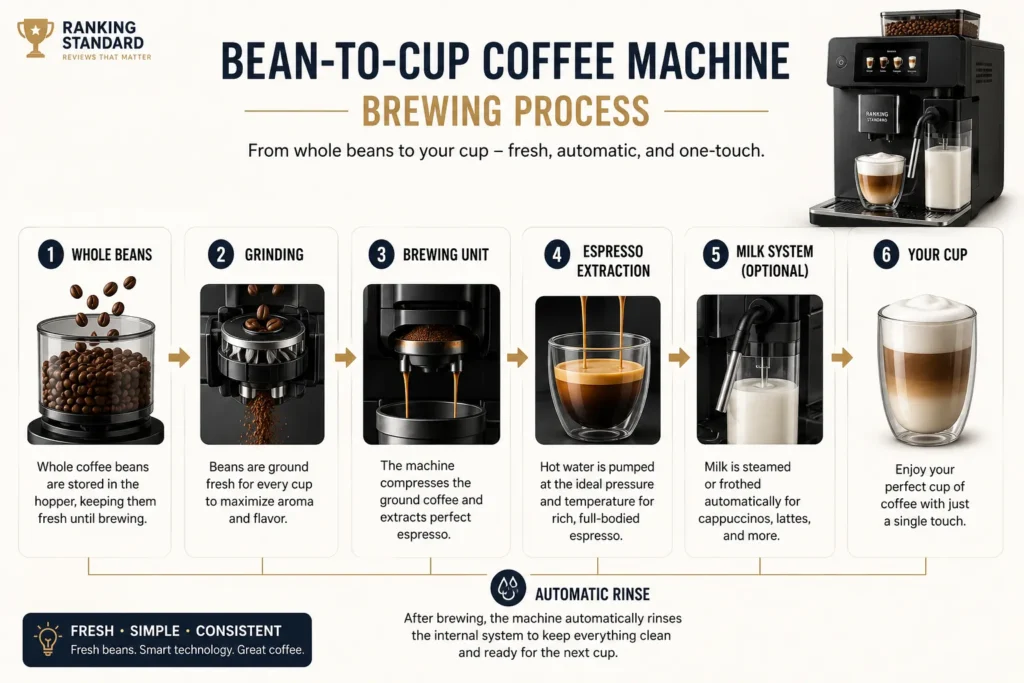
A bean-to-cup coffee machine is an all-in-one system that automatically grinds whole coffee beans, brews espresso, and often prepares milk-based drinks with the press of a button.
Unlike capsule machines, it doesn’t rely on pre-packaged pods.
Unlike manual espresso machines, it doesn’t require grinding, tamping, or managing extraction manually.
Everything happens inside the machine.
The typical brewing process looks like this:
- Whole beans are stored in the hopper.
- The machine grinds fresh beans for every cup.
- Water is heated to brewing temperature.
- Espresso is extracted automatically.
- Milk is steamed or frothed if selected.
- The machine performs a quick rinse cycle after use.
For many households, this combination of automation and fresh coffee is exactly what makes bean-to-cup machines so appealing.
Why Bean-to-Cup Machines Have Become So Popular
The biggest reason is simple:
Freshly ground coffee tastes noticeably better than pre-ground coffee.
Coffee beans begin losing aroma almost immediately after grinding.
By grinding beans just before brewing, bean-to-cup machines preserve much more of the coffee’s natural flavor and aroma.
But taste isn’t the only reason.
Modern machines have become significantly easier to use.
Many now feature:
- One-touch cappuccino and latte preparation
- Adjustable grind settings
- Personalized user profiles
- Automatic cleaning programs
- Smartphone connectivity
- Multiple drink presets
What once required café-level skills can now be done in less than a minute.
Bean-to-Cup vs Capsule Machines
This is one of the most common buying decisions.
Capsule machines excel in simplicity.
Insert a capsule.
Press a button.
Throw the capsule away.
Bean-to-cup machines require a little more maintenance, but they offer much greater flexibility.
You can choose any coffee beans you like.
You can adjust strength, grind size, and drink volume.
And over time, buying whole beans is usually much more economical than buying capsules.
For someone who drinks coffee every day, the long-term savings can become substantial.
Who Should Buy a Bean-to-Cup Machine?
Bean-to-cup machines are an excellent choice for people who:
- Drink coffee every day.
- Prefer espresso-based drinks such as cappuccino or latte.
- Want fresh coffee without learning manual espresso techniques.
- Have multiple coffee drinkers in the household.
- Value convenience but still care about coffee quality.
However, they may not be the best choice for everyone.
If you drink only one cup per week, a capsule machine may be more practical.
If you enjoy complete control over every stage of espresso extraction, a manual or semi-automatic machine may provide a more satisfying experience.
Choosing the right coffee machine isn’t about buying the most advanced model.
It’s about matching the machine to your lifestyle.
The Ranking Standard Philosophy
At Ranking Standard, we don’t ask:
“Is this the best coffee machine?”
Instead, we ask:
“Is this the best coffee machine for this type of user?”
A bean-to-cup machine isn’t trying to replace a professional espresso setup.
It’s designed to solve a different problem:
Deliver consistently good coffee with minimal effort.
Understanding that purpose is the key to evaluating every machine fairly.
The Advantages, Disadvantages, and What Really Matters
If you’ve narrowed your search to a bean-to-cup coffee machine, you’ve already made one important decision.
You want better coffee than a capsule machine can typically offer, but you don’t want the complexity of preparing espresso manually every morning.
For many people, that’s exactly where bean-to-cup machines shine.
However, they aren’t perfect.
Like every category of coffee machine, they involve trade-offs.
Understanding those trade-offs is far more valuable than simply reading a list of features.
The Biggest Advantages
Fresh Coffee Every Time
Perhaps the greatest advantage is freshness.
Because the machine grinds whole beans immediately before brewing, every cup captures more aroma and flavor than pre-ground coffee.
For daily coffee drinkers, this difference is immediately noticeable.
One-Touch Convenience
Modern bean-to-cup machines remove much of the work traditionally associated with espresso.
Many models allow users to prepare:
- Espresso
- Americano
- Cappuccino
- Latte
- Flat White
with a single touch.
For busy households, this convenience becomes one of the machine’s biggest strengths.
Lower Long-Term Coffee Costs
While bean-to-cup machines usually cost more upfront, whole coffee beans are generally much cheaper than coffee capsules over the long run.
If you prepare multiple coffees every day, the savings can become significant over several years.
The machine may eventually pay for part of its purchase price through lower coffee costs alone.
Consistent Results
One of the reasons many people choose bean-to-cup machines is consistency.
Unlike manual espresso preparation, where grind size, tamping pressure, and extraction time all affect the result, automatic systems are designed to produce reliable coffee every day.
You may sacrifice a little flexibility, but you gain predictability.
The Biggest Disadvantages
No coffee machine is perfect.
Bean-to-cup machines also have weaknesses that buyers should understand before making a decision.
Higher Purchase Price
Compared with capsule or drip machines, bean-to-cup machines require a larger initial investment.
Premium models from brands like Jura or Miele can cost several times more than entry-level alternatives.
For occasional coffee drinkers, that investment may be difficult to justify.
More Cleaning
Automation doesn’t eliminate maintenance.
Milk systems require regular cleaning.
The brewing unit needs attention.
Water filters and descaling cycles are still necessary.
Many machines automate part of this process, but owners should still expect regular maintenance.
More Internal Components
Bean-to-cup machines combine:
- Grinder
- Brewing system
- Water heating system
- Milk system
- Electronics
into one appliance.
That makes them convenient—but also more mechanically complex.
Long-term reliability often depends on build quality and proper maintenance.
Features That Actually Matter
Manufacturers often advertise dozens of features.
In reality, only a handful have a major impact on everyday use.
The most important include:
- Grinder quality
- Milk frothing system
- Ease of cleaning
- Drink customization
- Brewing consistency
- Reliability
- Service and parts availability
Features like Wi-Fi connectivity or colorful touchscreens may look impressive, but they rarely influence the quality of your morning coffee.
When comparing machines, focus on the features you’ll actually use—not the ones that simply sound impressive.
Common Buying Mistakes
After reviewing hundreds of products across different categories, we’ve noticed the same mistakes appearing again and again.
Buying More Machine Than You Need
Many people purchase expensive machines with dozens of drink options, only to make the same cappuccino every morning.
Ignoring Maintenance
Every automatic coffee machine requires cleaning.
Ignoring this leads to reduced performance and shorter machine life.
Choosing Based Only on Price
The cheapest machine isn’t always the best value.
Likewise, the most expensive model isn’t automatically the right choice.
A machine that fits your daily routine often delivers far greater long-term satisfaction than one packed with features you’ll never use.
The Ranking Standard View
At Ranking Standard, we believe bean-to-cup machines occupy one of the strongest positions in today’s coffee market.
They offer an excellent balance between:
- Convenience
- Coffee quality
- Long-term ownership
- Everyday usability
That doesn’t mean they’re the best choice for everyone.
But for households that prepare fresh coffee every day and want café-quality drinks without mastering espresso techniques, few categories provide a better overall ownership experience.
How Ranking Standard Evaluates Bean-to-Cup Coffee Machines
By now, you’ve probably realized something important.
Not every bean-to-cup coffee machine is built for the same person.
Some prioritize speed.
Some focus on milk drinks.
Others aim to deliver café-quality espresso at home.
That’s why comparing every machine in one simple ranking doesn’t tell the whole story.
Instead of asking,
“Which bean-to-cup machine is the best?”
Ranking Standard asks a different question:
“Which bean-to-cup machine is the best for your lifestyle?”
That difference changes how we evaluate every product.
The Bean-to-Cup Positioning Map
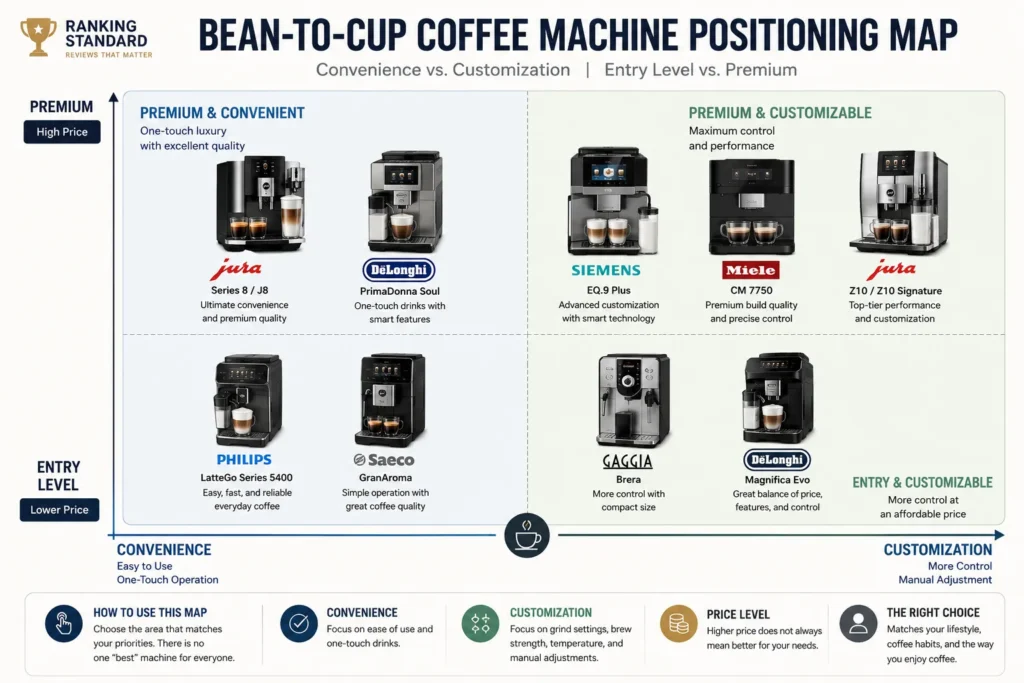
Rather than organizing machines by price alone, we position them according to two factors that matter most in everyday use:
- Convenience
- Coffee Customization
Some machines are designed for effortless daily coffee.
Others give users much greater control over grind settings, brewing strength, temperature, and drink customization.
Neither approach is automatically better.
A family making six cappuccinos every morning may value simplicity.
A coffee enthusiast may happily spend extra time adjusting every setting.
The right choice depends on how you actually make coffee—not on which machine has the highest price tag.
Why Expensive Doesn’t Always Mean Better
Many premium bean-to-cup machines include features such as:
- Large touch displays
- Multiple user profiles
- Smartphone control
- Advanced drink customization
These features can improve the experience for some users.
But they don’t necessarily improve the quality of every cup.
For someone who prepares the same Americano every morning, many of those extra features may never be used.
That’s why Ranking Standard never rewards complexity for its own sake.
Every feature should provide real value to the person buying the machine.
The Ranking Standard Score
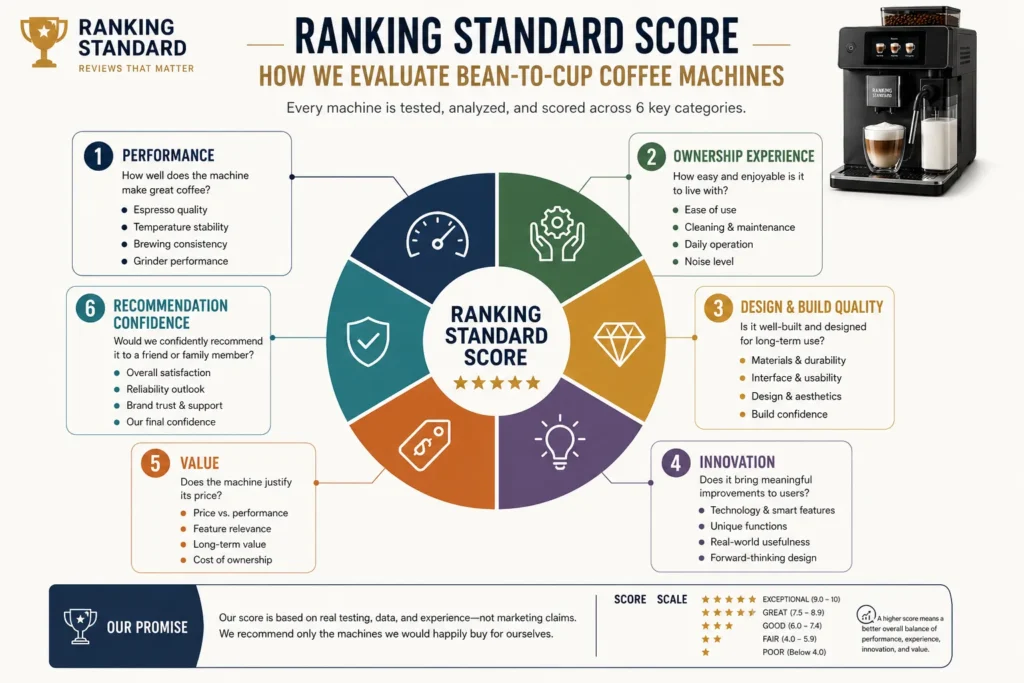
Every bean-to-cup machine is evaluated using the same objective framework.
Performance
Does it consistently produce excellent coffee?
Is extraction stable across repeated use?
Ownership Experience
How easy is daily operation?
How simple is cleaning?
How reliable is long-term ownership?
Design & Build Quality
Does the machine feel durable?
Is the interface intuitive?
Will it still feel modern after years of use?
Innovation
Does the machine introduce meaningful improvements that genuinely benefit users?
Innovation isn’t about adding more buttons.
It’s about making better coffee more easily.
Value
Does the machine justify its price?
A mid-range model offering outstanding reliability and coffee quality may score higher than a premium machine with expensive features that add little practical benefit.
Recommendation Confidence
Finally, we ask one simple question:
If we were buying a bean-to-cup coffee machine with our own money today, would we confidently recommend this model to a friend?
That answer often reveals more than any technical specification.
Who Should Buy a Bean-to-Cup Machine?
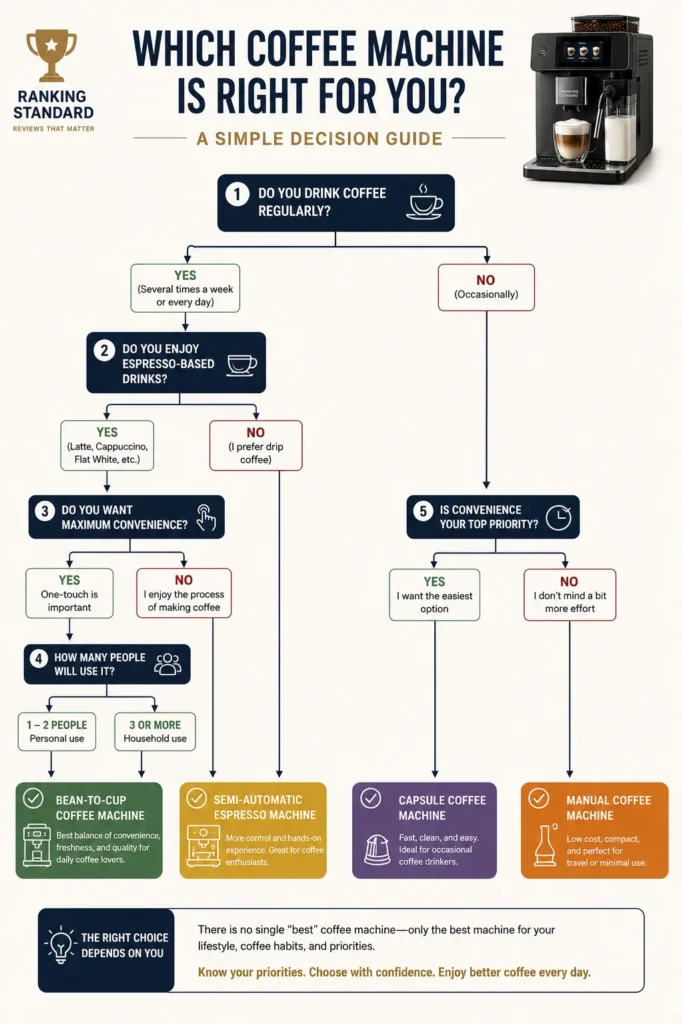
After evaluating the category as a whole, we believe bean-to-cup machines are best suited for people who:
- Drink coffee every day.
- Enjoy espresso-based drinks.
- Want fresh coffee without learning manual brewing techniques.
- Prefer convenience without sacrificing quality.
- Plan to keep their machine for many years.
However, they may not be the best choice if you:
- Drink coffee only occasionally.
- Prefer complete manual control over extraction.
- Have a very limited budget.
- Mostly drink filter coffee.
In those cases, another category may offer a better overall experience.
Choosing the right machine always begins with understanding your own habits.
Final Thoughts
Bean-to-cup coffee machines have earned their popularity for good reason.
They bridge the gap between convenience and quality better than almost any other coffee machine category.
But no machine is perfect for everyone.
The smartest buying decision isn’t choosing the machine with the most features.
It’s choosing the machine you’ll genuinely enjoy using every morning for years to come.
That’s exactly what Ranking Standard is designed to help you do.
Because the goal isn’t simply to own a coffee machine.
The goal is to enjoy every cup it makes.